
Navigating exercise with age can bring unique challenges, especially when dealing with joint discomfort. For many older adults, maintaining leg strength is vital for daily activities and overall independence. Lunges are excellent for this, targeting major muscle groups in the legs and glutes. However, pre-existing knee issues often make traditional lunges painful or even risky. This is why understanding how to modify lunges for senior knee problems is so important. This article will guide you through thoughtful adjustments, ensuring you can strengthen your lower body safely and effectively. We aim to help you continue moving well, without unnecessary strain on your knees.
- •Understanding Senior Knee Problems and Lunge Mechanics
- ◦Why Traditional Lunges Can Be Challenging for Senior Knee Problems
- •Fundamental Principles to Modify Lunges for Senior Knee Problems
- •Specific Techniques to Modify Lunges for Senior Knee Problems
- ◦Reducing Lunge Depth: The Partial Lunge
- ◦Using Support: Wall, Chair, or TRX Assisted Lunges
- ◦Altering Stance: Wider or Shorter Steps
- ◦Changing Lunge Direction: Reverse Lunges and Static Lunges
- ◦Incorporating Stability Aids: Dumbbells for Balance, Not Load
- ◦Surface Considerations: Softer Landing
- ◦Tempo Control: Slower, More Deliberate Movements
- ◦Bodyweight vs. Added Load
- •Progression and Regression When You Modify Lunges for Senior Knee Problems
- ◦Making It Easier (Regression)
- ◦Making It Harder (Progression)
- •Common Mistakes to Avoid When You Modify Lunges for Senior Knee Problems
- ◦Ignoring Pain Signals
- ◦Rushing Movements
- ◦Incorrect Knee Alignment
- ◦Overloading Too Soon
- •Integrating Modified Lunges into a Routine
- ◦Frequency and Sets
- ◦Combining with Other Exercises
- ◦Holistic Approach to Knee Health
- •When to Seek Professional Guidance
- ◦Persistent Pain
- ◦Uncertainty About Form
- ◦Specific Medical Conditions
- •Conclusion
Many seniors experience some form of knee discomfort, whether it's from arthritis, past injuries, or general wear and tear. This doesn't mean you have to give up on beneficial exercises like lunges. Instead, it means approaching them with a smart, adaptive mindset. Learning to modify lunges for senior knee problems allows individuals to reap the significant benefits of this compound exercise. These benefits include improved balance, enhanced functional strength, and better mobility. Our goal here is to empower you with practical knowledge. You will learn to adapt lunges to suit your body's current capabilities.
By exploring various techniques to modify lunges for senior knee problems, we can transform a potentially challenging exercise into a valuable part of a senior-friendly fitness routine. This involves a careful look at form, depth, support, and progression. Remember, the aim is always to educate and provide actionable insights. We want to help you maintain an active lifestyle with confidence and comfort. We will delve into specific strategies to make lunges accessible for those with sensitive knees.
Understanding Senior Knee Problems and Lunge Mechanics
Before we discuss how to modify lunges for senior knee problems, it is helpful to understand why knees might hurt during this movement. Senior knee problems often stem from conditions like osteoarthritis. This is where cartilage cushioning the joints wears down over time. Other issues include meniscal tears, patellofemoral pain syndrome, or general joint instability. These conditions can make deep knee flexion or sudden impact painful.
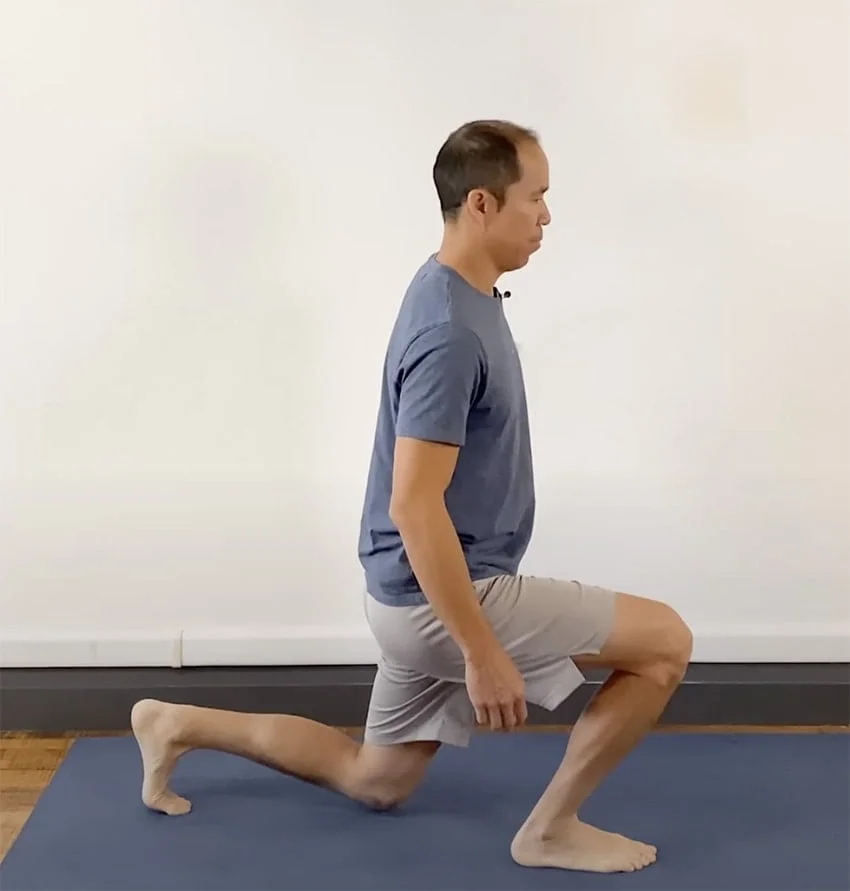
A traditional lunge involves stepping forward or backward, bending both knees to about a 90-degree angle. The front knee tracks over the ankle, and the back knee hovers just above the ground. This movement places significant stress on the knee joint, especially at the bottom of the movement. The forces involved can exacerbate pain in an already compromised knee. This is why learning to modify lunges for senior knee problems is a game-changer. It allows for strength building without the typical risks.
The mechanics of a lunge require good balance and coordination. They also demand adequate strength in the quadriceps, hamstrings, and glutes. If any of these components are lacking, or if the knees are sensitive, the exercise can become difficult. It might even become unsafe. Understanding these underlying factors helps us appreciate why specific modifications are so essential. They help protect the joints while still engaging the muscles effectively.
Why Traditional Lunges Can Be Challenging for Senior Knee Problems
Traditional lunges often present several challenges for older adults. The deep knee bend required can put excessive pressure on the patella and surrounding cartilage. This is particularly true for those with arthritis. The forward momentum of a stepping lunge can also be difficult to control. This increases the risk of instability and potential falls. Furthermore, the balance component of a lunge can be demanding. This is a common area of concern for seniors.
Another factor is muscle imbalances. Over time, some muscles become weaker or tighter, affecting how the knee moves. For instance, weak gluteal muscles can lead to the knee caving inward during a lunge. This puts unnatural stress on the joint. Therefore, when we look to modify lunges for senior knee problems, we are addressing multiple facets. These include joint stress, balance, and muscle activation patterns. Our approach is holistic and focused on safety first.
Fundamental Principles to Modify Lunges for Senior Knee Problems
When looking to modify lunges for senior knee problems, certain core principles should always guide your approach. The primary goal is to minimize discomfort and prevent injury. This means starting slowly and gradually. It also means paying close attention to your body's signals. Pain is always a sign to stop or adjust. Never push through sharp or persistent knee pain.
Listen to Your Body: This is perhaps the most critical principle. Every individual's body is different. What works for one person might not work for another. Pay attention to how your knees feel during and after the exercise. Mild muscle fatigue is normal, but joint pain is not. This awareness is key to successfully modify lunges for senior knee problems.
Prioritize Proper Form Over Depth: It's far better to perform a shallow lunge with perfect form than a deep lunge with poor mechanics. Incorrect form can place undue stress on the knees, hips, and lower back. Focus on maintaining a stable torso, keeping your front knee aligned with your toes, and engaging your core. This emphasis on form is crucial when you modify lunges for senior knee problems.
Gradual Progression: Do not try to do too much too soon. Start with the easiest modification and only increase the challenge when you feel comfortable and strong enough. This might mean starting with fewer repetitions, smaller ranges of motion, or more support. Slowly, you can build up your strength and confidence. This thoughtful progression is essential to modify lunges for senior knee problems safely.
Consult a Professional: Before starting any new exercise program, especially if you have chronic knee pain or other medical conditions, consult with a doctor or physical therapist. They can provide personalized advice and ensure the modifications are appropriate for your specific needs. Their guidance can be invaluable as you learn to modify lunges for senior knee problems.
Specific Techniques to Modify Lunges for Senior Knee Problems
Now, let's dive into the practical ways you can modify lunges for senior knee problems. These techniques aim to reduce stress on the knee joint while still effectively working the leg muscles. Remember to experiment with these options to find what feels best for you. There isn't a one-size-fits-all solution.
Reducing Lunge Depth: The Partial Lunge
One of the most effective ways to modify lunges for senior knee problems is to simply reduce the depth of the movement. A partial lunge involves only bending your knees slightly, perhaps just a few inches. You don't need to aim for a 90-degree angle. This significantly decreases the compression forces on the knee joint. It still engages the quadriceps and glutes. As your strength and comfort improve, you can gradually increase the depth. Even a small bend can be beneficial.
Using Support: Wall, Chair, or TRX Assisted Lunges
Adding external support can greatly enhance stability and confidence. This is a fantastic way to modify lunges for senior knee problems. Low-impact calisthenics exercises often incorporate such supports. You can hold onto a sturdy wall, the back of a chair, or even a resistance band anchored to a stable object. A TRX suspension trainer also offers excellent support. This allows you to focus on the movement pattern without worrying as much about balance. The support can also help you control the descent and ascent more smoothly. This reduces jerking motions that can irritate the knees. This method is particularly helpful when you first start to modify lunges for senior knee problems.
Altering Stance: Wider or Shorter Steps
The width and length of your lunge stance can dramatically impact knee comfort. A wider stance (stepping out to the side more) can sometimes help distribute weight differently. This might alleviate pressure on certain parts of the knee. A shorter step, on the other hand, reduces the overall range of motion required. This makes the lunge less demanding on the knee joint. Experiment with both to see which feels better. Finding the optimal foot placement is key when you modify lunges for senior knee problems. This small adjustment can make a big difference.
Changing Lunge Direction: Reverse Lunges and Static Lunges
Traditional forward lunges can be particularly challenging due to the momentum and forward knee travel. A reverse lunge, where you step backward instead of forward, can be a much gentler alternative. This helps to modify lunges for senior knee problems. Stepping backward typically places less shear force on the front knee. It also allows for more controlled movement. The front knee remains more stable over the ankle. Another excellent option is the static lunge (or split squat). Here, your feet remain stationary in a lunge position. You simply move up and down. This eliminates the balance challenge of stepping in and out. It allows you to focus solely on the knee bend and muscle engagement. For more ways to adapt exercises for knee issues, consider exploring articles like modified squat for seniors knee arthritis.
Incorporating Stability Aids: Dumbbells for Balance, Not Load
While often used for adding resistance, light dumbbells can also serve as stability aids. Holding a light dumbbell in each hand, with arms relaxed by your sides, can help lower your center of gravity. This can improve your balance during the lunge. The focus here is not on adding load to the muscles. Instead, it is on using the weight to provide a sense of groundedness. This is another subtle yet effective way to modify lunges for senior knee problems.
Surface Considerations: Softer Landing
The surface you exercise on can make a difference. Performing lunges on a slightly softer surface, such as a yoga mat, carpet, or a sprung gym floor, can absorb some of the impact. This reduces stress on the knees compared to hard concrete or tile. While not a direct modification of the lunge movement itself, it is an environmental adjustment. This can significantly improve comfort when you modify lunges for senior knee problems. Always ensure the surface is stable and non-slip.
Tempo Control: Slower, More Deliberate Movements
Rushing through lunges can lead to jerky movements and poor form. This increases the risk of knee strain. By performing lunges at a slower, more controlled tempo, you can focus on muscle activation and proper alignment. Slowing down the eccentric (lowering) phase is particularly beneficial. This increases time under tension for the muscles. It also allows for greater control over the knee joint. This mindful approach is a key part of how to modify lunges for senior knee problems effectively.
Bodyweight vs. Added Load
For seniors with knee problems, starting with bodyweight lunges is almost always the best approach. Adding external weights (dumbbells, barbells) increases the load on the knee joints. This should only be considered once bodyweight modifications are comfortable and pain-free. Even then, start with very light weights and progress cautiously. The goal is to build strength, not to lift the heaviest weight. This careful consideration of load is vital when you modify lunges for senior knee problems.
Progression and Regression When You Modify Lunges for Senior Knee Problems
Understanding how to progress and regress your modified lunges is crucial for long-term success. Exercise should be a journey, not a static destination. As your knees strengthen and your confidence grows, you will want to gradually increase the challenge. Conversely, on days when your knees feel more sensitive, you might need to dial back the intensity. This adaptability is key to maintaining an active lifestyle.
Making It Easier (Regression)
If a particular modification still causes discomfort, or if you're having a bad knee day, you can always regress. This means making the exercise even easier. For example, if reverse lunges are too much, start with static lunges with wall support. If partial lunges are difficult, try holding onto two chairs for extra balance. You can also reduce the number of repetitions or sets. Sometimes, just performing the movement without any knee bend, focusing solely on the step and hip hinge, can be a starting point. The aim is to find a version that causes no pain. This foundational step is essential to modify lunges for senior knee problems safely.
Making It Harder (Progression)
Once you're consistently performing a modified lunge without pain, you can gradually increase the difficulty. Here are some ways to progress:
- Increase Depth: Slowly lower your body a little further into the lunge.
- Reduce Support: Transition from two-hand support to one-hand, then fingertip, then no support.
- Increase Repetitions/Sets: Add more reps or an extra set.
- Add Light Weight: Once bodyweight is mastered, hold very light dumbbells.
- Increase Tempo (Slightly): While still controlled, you can gradually speed up the movement if comfort allows.
- Try Different Lunge Variations: Move from static to reverse, or from supported reverse to unsupported reverse.
This systematic approach ensures that you continue to challenge your muscles. It also minimizes stress on your knees. This careful progression is a core element of how to modify lunges for senior knee problems effectively.
Common Mistakes to Avoid When You Modify Lunges for Senior Knee Problems
Even with modifications, certain mistakes can undermine your efforts and potentially cause discomfort. Being aware of these pitfalls can help you stay safe and get the most out of your modified lunges. It is important to remember that the goal is to strengthen, not to strain.
Ignoring Pain Signals
This is the most critical mistake. Any sharp, stabbing, or persistent pain in your knee is a clear signal to stop. Do not try to push through it. Pain means something is wrong, or the exercise is too much for your current knee condition. It’s better to regress to an easier modification or stop the exercise entirely for the day. Listening to your body is paramount when you modify lunges for senior knee problems. Pushing through pain can lead to injury.
Rushing Movements
As mentioned earlier, performing lunges too quickly can compromise form and increase impact on the knee. This is particularly true during the lowering phase. Slow, controlled movements allow your muscles to engage properly. They also protect your joints. Take your time, focus on the movement, and breathe. This mindful approach is essential when you modify lunges for senior knee problems.
Incorrect Knee Alignment
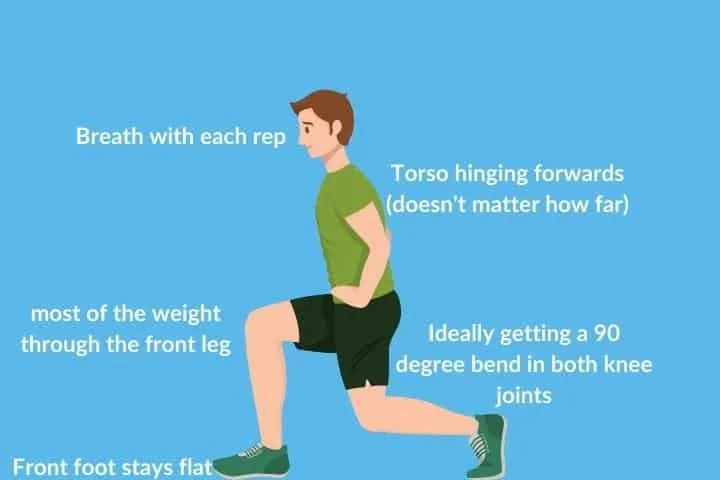
Ensure your front knee tracks directly over your ankle and aligns with your second toe. Do not let it cave inward or splay outward. Also, avoid letting your front knee go too far past your toes, especially when performing forward lunges. While some knee-over-toe movement can be natural and safe for healthy knees, it's best to minimize it for sensitive senior knees. Proper alignment protects the knee joint. This is a crucial aspect of how to modify lunges for senior knee problems.
Overloading Too Soon
Resist the temptation to add heavy weights or increase depth too quickly. Your body needs time to adapt and strengthen. Gradual progression is always the safest and most effective path. Starting with bodyweight and mastering the modified form is key. Only then should you consider adding external resistance. This patient approach is vital when you modify lunges for senior knee problems.
Integrating Modified Lunges into a Routine
Once you've found the right ways to modify lunges for senior knee problems, it's important to integrate them into a consistent exercise routine. Regularity is key to building strength and improving knee health. Think about how these modified lunges fit into your broader fitness picture. A balanced routine will include various types of exercises.
Frequency and Sets
For most seniors, performing modified lunges 2-3 times per week is a good starting point. This allows for adequate muscle recovery between sessions. Aim for 2-3 sets of 8-12 repetitions for each leg. If you're new to the exercise, start with fewer reps and sets. Gradually increase them as your strength and endurance improve. Consistency over intensity is often more beneficial for joint health. This regular practice helps to reinforce the benefits of learning to modify lunges for senior knee problems. You can learn more about general strengthening for seniors at NIH's guide on exercise for older adults.
Combining with Other Exercises
Modified lunges are excellent for lower body strength, but they shouldn't be your only exercise. Combine them with other senior-friendly exercises that target different muscle groups and fitness components. This includes exercises for core strength, upper body strength, flexibility, and cardiovascular health. For example, you might pair modified lunges with seated rows, wall push-ups, or gentle stretching. A well-rounded program supports overall physical function and reduces strain on any single joint. This holistic approach complements your efforts to modify lunges for senior knee problems.
Holistic Approach to Knee Health
Remember that exercise is just one piece of the puzzle for knee health. A holistic approach includes maintaining a healthy weight to reduce stress on the joints. It also involves eating an anti-inflammatory diet. Ensuring adequate hydration and getting enough rest are also important. Consider activities like swimming or cycling. These are non-weight-bearing exercises that can strengthen the muscles around the knee without impact. All these elements work together to support joint health. They enhance the effectiveness of your efforts to modify lunges for senior knee problems.
When to Seek Professional Guidance
While this article provides comprehensive strategies to modify lunges for senior knee problems, there are times when professional guidance is indispensable. Your health is paramount, and sometimes, self-modification might not be enough. Knowing when to consult an expert is a sign of responsible self-care.
Persistent Pain
If, despite all modifications, you still experience persistent pain during or after lunges, it's time to see a doctor or physical therapist. Persistent pain indicates an underlying issue that needs medical assessment. It could be a sign of worsening arthritis, a meniscus tear, or another condition. A professional can diagnose the problem and recommend appropriate treatment or alternative exercises. Do not ignore persistent knee pain when trying to modify lunges for senior knee problems.
Uncertainty About Form
If you're unsure whether you're performing the modified lunge correctly, or if you feel unstable, a physical therapist or certified personal trainer specializing in senior fitness can help. They can observe your form, provide real-time feedback, and make adjustments tailored to your body. Having a professional guide you through the initial stages of learning to modify lunges for senior knee problems can prevent injury and build confidence. They can ensure you are using proper technique.
Specific Medical Conditions
If you have specific medical conditions beyond general knee pain, such as severe osteoporosis, a recent knee surgery, or other musculoskeletal issues, always consult your healthcare provider first. They can advise whether lunges, even modified ones, are appropriate for your condition. They might also recommend specific precautions or alternative exercises. Their expertise is crucial in safely navigating how to modify lunges for senior knee problems with complex health needs.
Conclusion
Learning to modify lunges for senior knee problems is a proactive step toward maintaining strength and mobility as you age. It demonstrates a thoughtful approach to fitness, acknowledging individual limitations while striving for functional improvement. By implementing the strategies discussed, you can transform a challenging exercise into a safe and highly beneficial component of your routine. Remember that consistency, proper form, and listening to your body are your greatest allies. Embrace these modifications, and continue to move with confidence and comfort, knowing you are supporting your knee health responsibly.


